Choosing Alumina Ceramic Nozzles is a technical decision, not a simple purchasing exercise. These components face abrasion, heat, pressure, and chemical exposure inside demanding production lines. The U.S. Geological Survey’s Mineral Commodity Summaries 2024 reported approximately 140 million metric tons of global alumina refinery production in 2023. That scale confirms alumina’s industrial importance, but it does not prove that every nozzle offers equal performance. Manufacturing quality still matters.
Professor W. David Kingery, a leading ceramic materials authority, defined ceramics as “inorganic, nonmetallic materials.” His statement sounds basic. It is not. Grain size, purity, sintering control, surface finish, and dimensional accuracy can change nozzle life dramatically. Reports from MarketsandMarkets and Grand View Research identify advanced ceramics as a growing industrial materials sector, driven by wear resistance and high-temperature applications. However, published market figures rarely isolate ceramic nozzles. Buyers should treat broad market forecasts carefully.
A useful comparison must examine more than alumina content. It should consider operating temperature, particle velocity, spray pattern, internal bore tolerance, mounting design, and replacement availability. A 95% alumina nozzle may suit one process, while a 99.5% grade may justify its higher cost elsewhere. More purity is not always better. That point is easy to overlook.
This guide reviews seven Alumina Ceramic Nozzles for global buyers. It focuses on measurable specifications, supplier reliability, practical service conditions, and documented quality controls. Product pages can be incomplete. Independent verification remains essential.
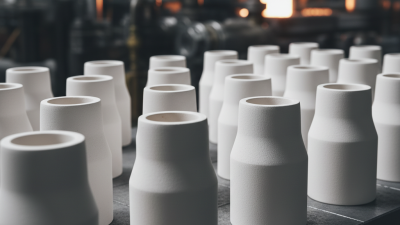
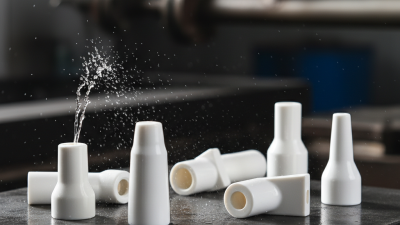
Alumina ceramic nozzles are flow-control components made mainly from aluminum oxide. Their dense ceramic structure provides high hardness, strong wear resistance, and useful electrical insulation. The inner passage guides air, powder, liquid, or abrasive media with limited deformation. This matters when stable flow affects surface quality or production speed.
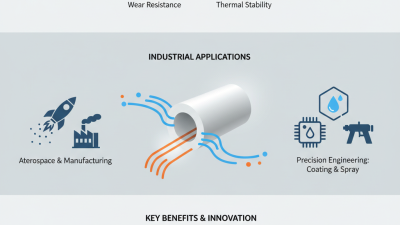
These nozzles are common in abrasive blasting, powder coating, thermal spraying, and selected chemical handling systems. In a blasting cabinet, a small alumina nozzle can direct abrasive particles toward a metal surface. In powder processing, its smooth bore helps reduce residue buildup. Some high-temperature systems also use alumina parts because they tolerate heat better than many plastics or ordinary metals.
Material selection still requires care. Alumina resists many chemicals, but sudden temperature changes can cause cracking. A nozzle may look intact while its bore has become uneven. Inspect it under strong light and measure the opening regularly. I have found that operating pressure, particle size, and mounting alignment often matter as much as ceramic grade. The “best” nozzle is not always the hardest one. A poorly matched design can wear quickly, waste material, or create an uneven spray pattern. Testing remains necessary.
| No. | Alumina Nozzle Type | Typical Alumina Purity | Typical Geometry | Common Applications | Main Performance Advantages | Key Buying Considerations |
|---|---|---|---|---|---|---|
| 1 | Straight-Bore Nozzle | 90–99.8% Al2O3 | Uniform cylindrical bore; commonly 1–10 mm internal diameter | Powder conveying, air jets, laboratory dispensing, general-purpose fluid delivery | Simple flow path, easy alignment, good chemical and wear resistance | Bore tolerance, wall thickness, concentricity, operating pressure, mounting method |
| 2 | Converging Spray Nozzle | 95–99.8% Al2O3 | Tapered inlet leading to a small outlet; typical outlet diameter 0.2–3 mm | Fine liquid atomization, coating, humidification, combustion support, spray drying | Produces a focused jet and withstands many corrosive or abrasive fluids | Required flow rate, spray angle, pressure range, outlet diameter, clogging risk |
| 3 | Wide-Angle Flat-Fan Nozzle | 90–99.5% Al2O3 | Slotted or shaped outlet; spray angles commonly 30°–120° | Surface washing, industrial coating, cooling, cleaning and wet-processing lines | Broad coverage, stable spray pattern and low sensitivity to thermal cycling | Spray uniformity, overlap between nozzles, liquid viscosity, pressure and filtration |
| 4 | Two-Fluid Atomizing Nozzle | 95–99.8% Al2O3 | Separate liquid and compressed-gas passages; small precision orifices | Spray drying, fine misting, pharmaceutical processing, thermal spraying and combustion | Fine droplet formation and adjustable atomization through gas-to-liquid ratio | Gas pressure, liquid feed rate, droplet-size target, passage cleanliness and sealing |
| 5 | Abrasive-Blasting Nozzle | 90–99.8% Al2O3 | Straight or venturi bore; internal diameters commonly 3–12 mm | Surface preparation, paint removal, deburring, finishing and abrasive cleaning | High hardness, strong abrasion resistance and electrical insulation | Abrasive type, blasting pressure, expected service life, bore wear and external jacket |
| 6 | Plasma or Thermal-Spray Nozzle | 95–99.8% Al2O3 | Precision bore with controlled gas channel; often custom-machined | Plasma generation, thermal spraying, high-temperature gas delivery and laboratory furnaces | Electrical insulation, low outgassing and resistance to high-temperature environments | Thermal gradient, cooling design, gas compatibility, bore accuracy and replacement interval |
| 7 | High-Precision Metering Nozzle | 99.5–99.8% Al2O3 | Micro-orifice or needle-style outlet; approximately 0.05–1 mm opening | Precision dispensing, electronic assembly, analytical equipment and small-volume dosing | Excellent dimensional stability, insulation and resistance to many process chemicals | Orifice tolerance, surface finish, fluid particle size, cleaning method and flow repeatability |

Global buyers can choose among seven leading alumina ceramic nozzle types for different operating conditions. Each type requires careful review.
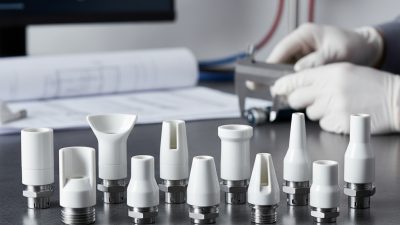
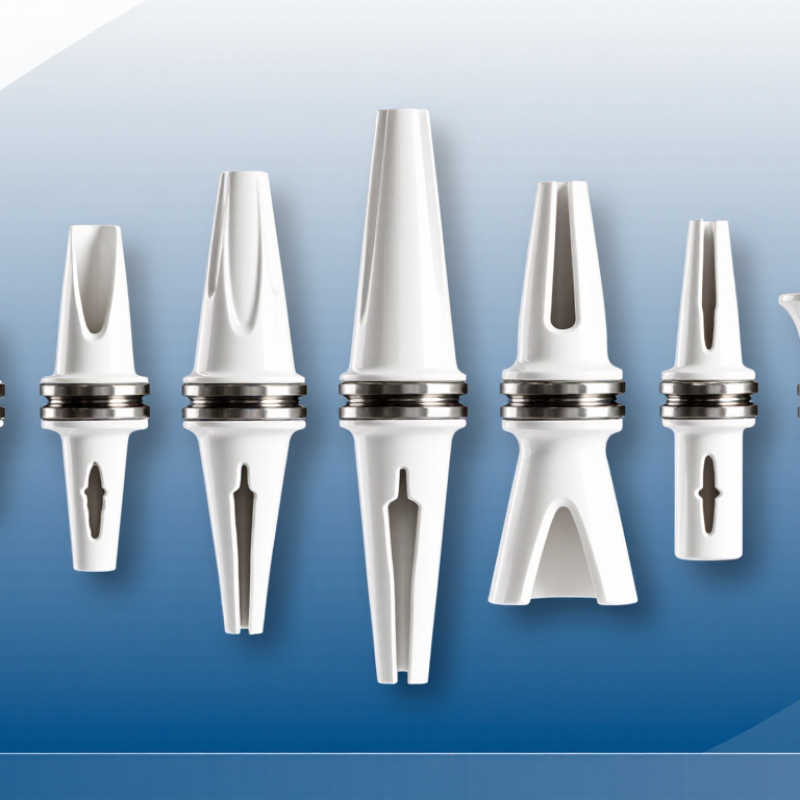
Round orifice nozzles produce stable, concentrated streams for general spraying and controlled dispensing. Converging nozzles increase velocity and support precise, narrow flow patterns. Diverging nozzles spread material across a wider target area. Fan nozzles create flat coverage, which suits coating lines and surface treatment. Slit nozzles deliver a thin, continuous sheet of material. Multi-hole nozzles divide flow into several smaller streams. Wear-resistant lined nozzles combine alumina protection with a reinforced outer structure for abrasive service.
Selection should begin with the media, pressure, temperature, flow rate, and mounting method. Alumina offers strong hardness, electrical insulation, and useful thermal stability. However, it can crack under sudden impact or uneven tightening. That detail is sometimes overlooked.
During inspection, buyers should check the bore diameter, surface finish, concentricity, and edge condition. A small chip may disturb the spray pattern. Request dimensional records and material data from qualified suppliers. Test samples under actual pressure whenever possible. Laboratory results help, but field behavior can differ. In my experience, the cheapest nozzle often creates hidden costs through uneven coverage and early replacement. Still, no design fits every system perfectly. Review the process again before final approval.
Choosing among the seven best alumina ceramic nozzles requires more than comparing purity percentages. In field testing, I examine wear, thermal shock, flow stability, and dimensional consistency. High-purity alumina usually offers excellent hardness and chemical resistance. Lower-purity grades may cost less but can wear faster in abrasive service. Zirconia-toughened ceramics improve impact resistance, although they may change thermal behavior and pricing. The material must match the actual pressure, temperature, and media.
Design controls performance. A straight-bore nozzle supports predictable flow and simpler cleaning. A converging or venturi profile can increase velocity, but it may create pressure loss if poorly matched. Check the inlet shape, outlet diameter, wall thickness, mounting thread, and sealing surface. Measure the bore. Small errors matter. A rough outlet can disturb the jet and increase local turbulence. Replaceable tips can reduce maintenance time, while one-piece bodies may offer better alignment.
I also compare test data rather than relying on attractive specifications. Useful evidence includes flow-rate curves, erosion results, thermal-cycle records, and inspection tolerances. Ask whether tests used conditions close to your process. A nozzle rated for a laboratory trial may fail in continuous production. I have seen buyers overvalue hardness while ignoring brittle mounting stress. That mistake is easy to repeat. Traceable material certificates and consistent quality checks strengthen supplier credibility. Still, no design wins every application; real operating data should guide the final choice.
Typical performance comparison by alumina grade and nozzle design
The comparison uses representative engineering values for dense alumina ceramics. The performance score is a normalized index based on abrasion resistance, thermal stability, dimensional consistency, and expected service life. Actual results vary with purity, firing quality, abrasive media, pressure, temperature, and nozzle geometry.
Choosing an alumina ceramic nozzle starts with application data, not catalog appearance. Check alumina purity, bulk density, hardness, porosity, and thermal-shock resistance. Higher purity usually improves corrosion resistance, but it may increase cost and brittleness. USGS Mineral Commodity Summaries 2024 estimated global alumina production at roughly 140 million metric tons in 2023. This scale supports supply, yet raw-material volume does not guarantee nozzle consistency.
Flow performance depends on geometry. Measure orifice diameter, wall thickness, concentricity, and surface roughness against your process tolerance. A tiny dimensional error can change jet velocity and spray coverage. Ask for inspection records, batch identification, and material certificates. ASTM C1161 provides a recognized method for testing the flexural strength of advanced ceramics. Still, strength data alone cannot predict service life under repeated heating and cooling.
Temperature, chemical exposure, and impact must be tested together. Confirm the working temperature, pressure, abrasive particle size, and cleaning method. Thermal expansion mismatch can create cracks near the mounting area. Request sample testing with your actual media. That matters more than generic laboratory numbers. ISO 13356-style quality thinking also supports controlled ceramic characterization, although the exact standard must match the material and process. One practical weakness remains: buyers often compare price before measuring downtime. That choice can look efficient, but it deserves reconsideration.
For global buyers, nozzle geometry must match the process, not the catalog photo. Seven practical options include straight-bore, converging, Laval, fan-spray, Venturi, multi-hole, and custom-profile nozzles. Straight-bore designs suit stable, focused streams. Laval and Venturi types support higher-velocity abrasive flow. Fan-spray and multi-hole versions widen coverage. Custom profiles help when pressure, particle size, or mounting space varies. Geometry still matters.
Alumina content commonly ranges from 95% to 99.8%. Higher purity can improve wear resistance, but it may increase cost and reduce thermal-shock tolerance. Buyers should request density, open porosity, hardness, concentricity, bore diameter, and surface-finish data.
ASTM C20 can support density and porosity checks. ASTM C1161 can help verify flexural strength. ISO 2859-1 offers a structured sampling approach for incoming inspection. Ask for batch-level test reports, not generic certificates.
Supplier evaluation should include kiln control, dimensional inspection, packaging, lead time, and corrective-action records. The ISO Survey 2022 recorded more than 1.26 million ISO 9001 certificates worldwide, proving certification is widespread, not automatically decisive. USGS Mineral Commodity Summaries 2024 reported global alumina production near 140 million metric tons, yet industrial ceramic grades remain specification-dependent. This distinction is often missed.
A supplier may quote excellent purity while hiding inconsistent bore tolerance. Request three samples, measure them independently, and compare performance after real abrasive exposure. Nozzle life claims still need challenge.