10 Essential Tips for Choosing the Right Ceramic Spray Nozzles
Choosing the right Ceramic Spray Nozzles is crucial for efficient application and performance. The global market for ceramic nozzles is projected to grow by 4.2% annually, highlighting their significance in various industries. Selecting the proper nozzle can impact not just the quality of the application but also the material waste and overall efficiency of production processes.
Data from industry reports indicate that poor nozzle choices can lead to up to 30% material waste. This not only affects profitability but also has a negative environmental impact. Therefore, understanding the specifics of Ceramic Spray Nozzles is essential for any professional involved in spraying applications. Proper selection decreases downtime, while improper choices result in increased costs and labor.
As you navigate through the essential tips for choosing ceramic nozzles, it's important to reflect on your specific needs and applications. Every detail matters, from nozzle size to spray patterns. The right decision will enhance your operations, but it requires critical evaluation and consideration of all variables involved.
Understanding the Different Types of Ceramic Spray Nozzles Available
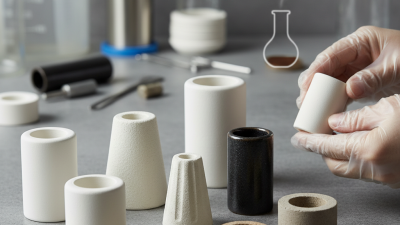
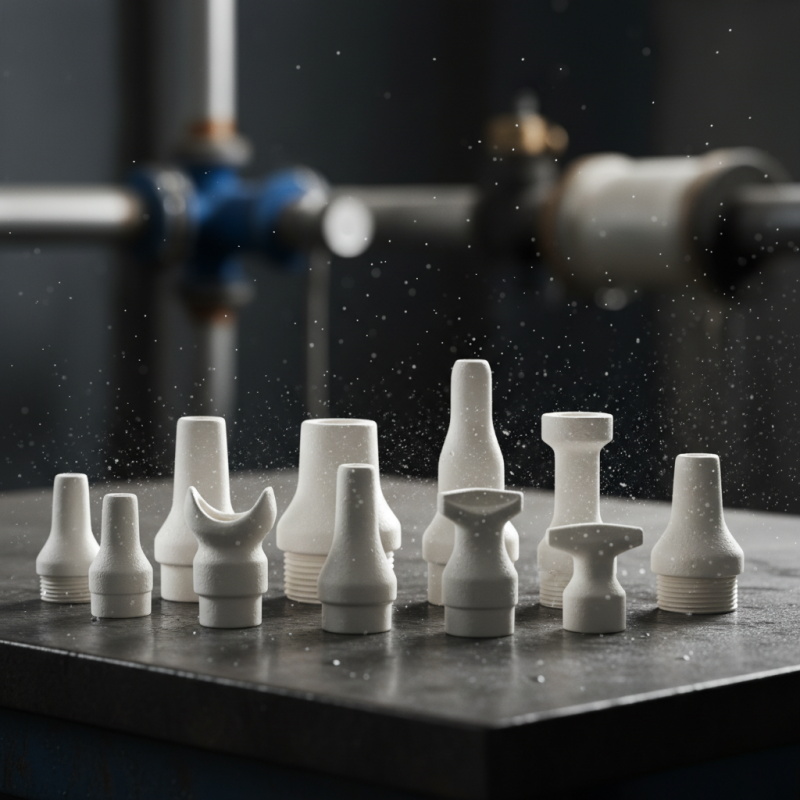
When selecting ceramic spray nozzles, understanding the variety available is crucial. Several types serve different purposes. For example, there are air atomizing nozzles, which create a fine spray for coatings. Then, there are flat fan nozzles that offer a wider spray pattern. Each nozzle type affects application efficiency and finish quality.
Choosing the right nozzle is not always straightforward. It requires consideration of the material being sprayed, viscosity, and desired finish. A poorly matched nozzle can lead to inconsistent application. Experimenting with different types may reveal surprising results. Sometimes less popular options perform better than expected.
Tip: Always review specifications before purchasing. Look for details like flow rate and spray angle. Test a small area first before full application. This step can identify potential issues. Remember, trial and error is part of the process. The right choice may not come easily. Keep an open mind during the selection.
Comparison of Different Types of Ceramic Spray Nozzles
The Importance of Material Composition in Ceramic Nozzle Performance
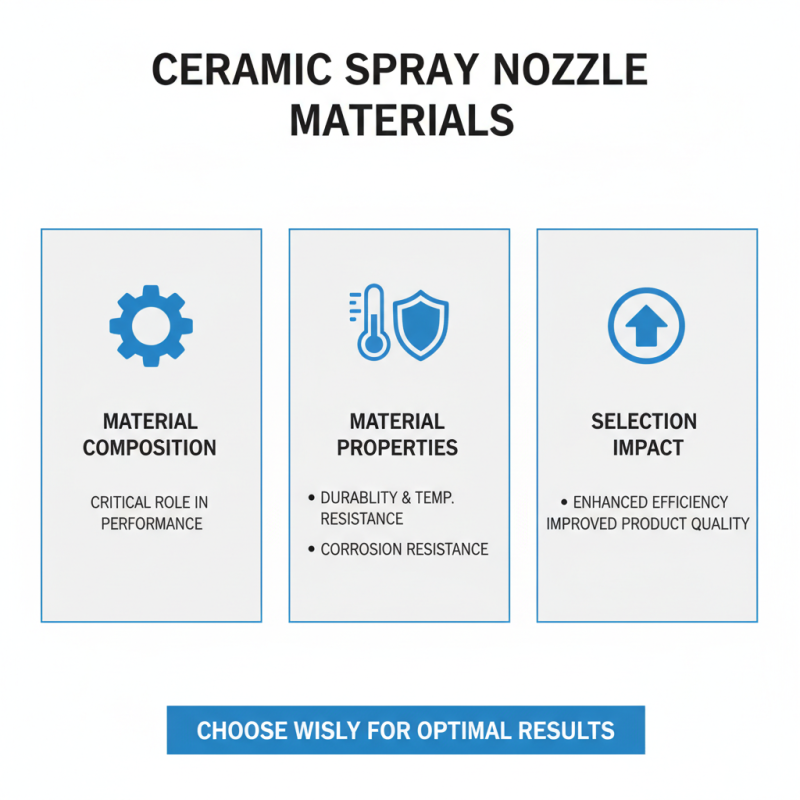
When selecting ceramic spray nozzles, the material composition plays a critical role. Different ceramic materials exhibit unique properties that affect nozzle performance. For instance, some ceramics boast high durability and temperature resistance, while others may corrode easily. Choosing the right material can enhance efficiency and product quality.
Not all ceramics are created equal. Dense ceramics, for example, tend to resist wear better than porous ones. A nozzle made from the wrong type of ceramic can fail prematurely. It's important to understand how material variations impact functionality. Under harsh conditions, inadequate materials lead to breakdowns and increased maintenance costs.
Testing various ceramic compositions can reveal unexpected results. A seemingly minor difference in material can significantly affect spray patterns. Consider how different compositions perform in real-world applications. This allows for better decisions based on specific needs. Balancing cost with performance is a continual challenge. Reflection on previous choices can guide future selections.
Evaluating Application Techniques for Optimal Spray Pattern Consistency
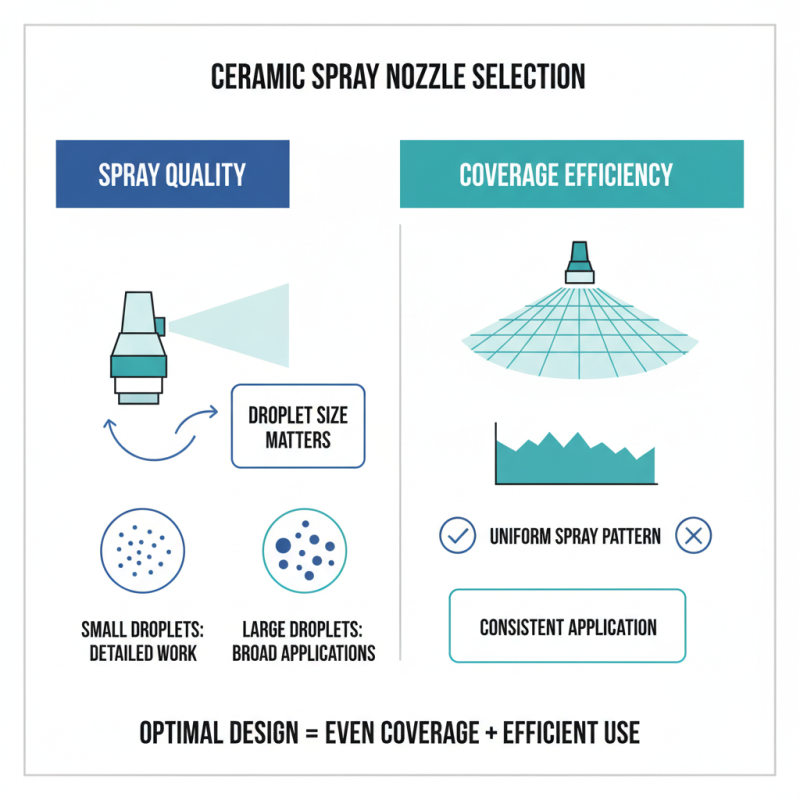
When selecting the right ceramic spray nozzle, it’s crucial to assess your application techniques. The spray pattern can significantly affect the coating's uniformity. Fine mist sprays work well for delicate surfaces, while wider patterns suit larger areas. Testing various nozzles on samples helps determine the best fit for your project.
Inconsistent spray patterns can lead to missed spots or over-application. This might cause pooling or uneven texture. Experiment with different distances and angles when spraying. A nozzle positioned too close may create drips, while one too far could produce uneven coverage. Regularly inspecting your setup ensures the desired results are achieved. Each adjustment offers insights into refining your technique.
Choosing the proper nozzle isn’t solely about specifications. Take time to understand how each nozzle interacts with your material. Document results from different techniques. Reflecting on successes and failures improves future spraying endeavors. This process is part of mastering the craft.
Industry Standards and Recommended Practices for Nozzle Selection
Choosing the right ceramic spray nozzle involves understanding industry standards. These standards address flow rates, pressure ratings, and spray patterns. For instance, the American Society for Testing and Materials (ASTM) sets guidelines for nozzle selection, focusing on performance and safety. According to a recent industry report, 75% of spray application issues stem from incorrect nozzle selection.
Another critical aspect is the material compatibility with ceramic coatings. Not all nozzles can withstand the wear and tear caused by abrasive materials. Studies indicate that proper material selection can increase nozzle life by up to 40%. Knowing the right specifications is essential, yet many overlook these details. Often, the choice comes down to convenience rather than compliance with best practices.
Managing the application environment is also vital. Factors like humidity, temperature, and surface type directly affect nozzle performance. Professionals recommend calibrating nozzles for specific conditions. Without this, results can vary significantly. A poorly chosen nozzle may lead to overspray or inadequate coating coverage. Thus, constant evaluation and adjustment are necessary for optimal results.
10 Essential Tips for Choosing the Right Ceramic Spray Nozzles
| Tip Number |
Tip Description |
Importance |
Common Applications |
| 1 |
Determine your project requirements |
High |
Industrial coating, Automotive |
| 2 |
Consider nozzle material compatibility |
High |
Chemical processing |
| 3 |
Evaluate spray pattern requirements |
Medium |
Coating, Painting |
| 4 |
Check for flow rate specifications |
High |
Agricultural spraying |
| 5 |
Choose the right nozzle size |
Medium |
Paint application |
| 6 |
Review manufacturer specifications |
Medium |
General use |
| 7 |
Consider operational pressure needs |
High |
Spray painting |
| 8 |
Assess spray angle configurations |
Medium |
Industrial cleaning |
| 9 |
Look for ease of maintenance |
Medium |
Maintenance operations |
| 10 |
Test nozzles before full-scale implementation |
High |
All applications |