Top Tips for Choosing the Right Engineering Ceramics?
Choosing the right engineering ceramics can be a daunting task. Different applications require specific properties, making careful selection crucial. Dr. Emily Chen, a leading expert in engineering ceramics, notes, "The success of a project often hinges on the right material choice." Her insight emphasizes the importance of understanding ceramic materials thoroughly.
Engineering ceramics are known for their durability and heat resistance. However, not all ceramics are created equal. The selection process requires knowledge of mechanical strength, thermal stability, and resistance to corrosion. It's vital to consider the environment in which the ceramics will function. Will they face extreme temperatures or abrasive conditions?
Flaws in choosing the incorrect material can lead to significant problems. These may include premature failure or increased costs. Therefore, thorough research and expert guidance are essential. Engaging with professionals in the field can provide valuable insights into the properties of various engineering ceramics. This approach reduces the likelihood of mistakes and boosts project success.
Understanding the Basics of Engineering Ceramics
Engineering ceramics are essential materials in many advanced applications. They are prized for their
durability,
heat resistance, and
mechanical strength. Understanding their properties can significantly enhance your selection process.
When choosing engineering ceramics, consider the application's specific needs. What temperature will the material face? What type of stress will it endure? These factors can greatly influence your choice. Another tip is to evaluate the material's
chemical resistance. Some ceramics excel under certain conditions while failing in others. Testing a small sample may reveal unexpected weaknesses.
The manufacturing method of the ceramic also shapes its final properties. Techniques like
sintering can yield stronger materials. However, this method may introduce variability. Stay cautious and consider the
consistency of supply. Regular testing and review of material performance can help in addressing potential failures. A proactive approach often leads to
better outcomes in engineering projects.
Identifying the Key Properties of Ceramics for Engineering Applications
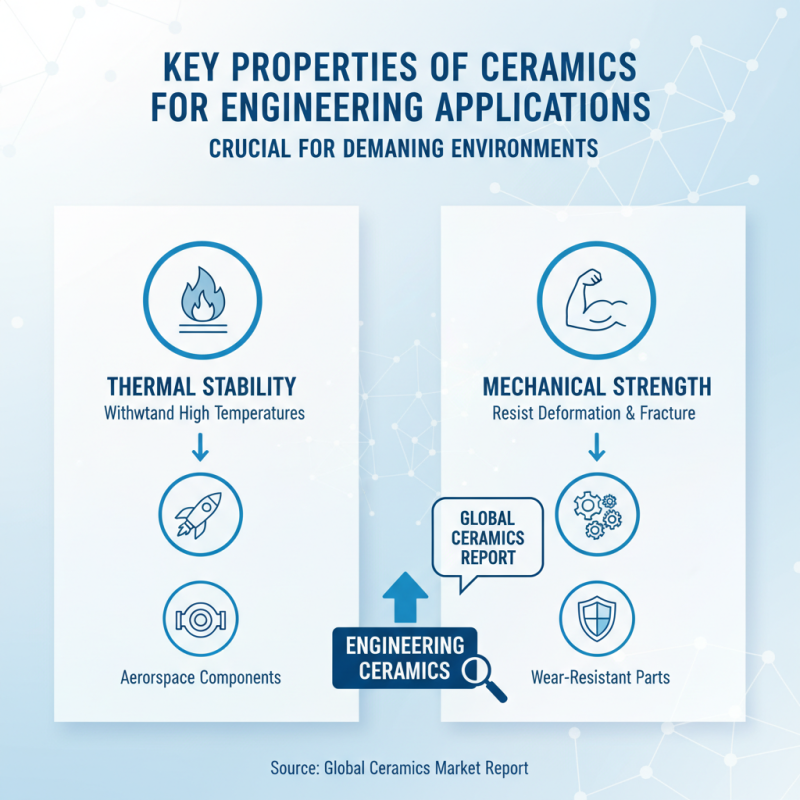
When selecting engineering ceramics, identifying the right properties is crucial. These materials often serve in demanding environments, making their characteristics vital. According to the Global Ceramics Market Report, thermal stability and mechanical strength are two key properties to consider. Ceramics can withstand high temperatures, which is essential in applications like aerospace and automotive components.
Another essential property is wear resistance. Ceramics outperform metals in abrasive environments, reducing maintenance costs and extending lifespans. A study published in the Journal of Materials Science reported that ceramics with a hardness of over 1500 HV significantly lower wear rates compared to steel. This is particularly relevant in industries involving heavy machinery.
However, not all ceramics are created equal. Many users overlook factors such as fracture toughness and thermal shock resistance. A material may exhibit high hardness but fail under dynamic loads. Engineers should assess each application individually. Understanding these nuances can lead to better material selection, ultimately improving performance and reducing failure risks.
Evaluating the Performance Requirements for Specific Projects
When evaluating the performance requirements for engineering ceramics, it is crucial to consider several factors. The intended application dictates specific properties needed, such as toughness, thermal stability, and wear resistance. Reports indicate that approximately 70% of failures in ceramic applications stem from inadequate material selection based on these parameters. Understanding the operating environment helps guide choices.
Mechanical strength is vital. For instance, ceramics used in aerospace applications require materials that endure extreme temperatures while maintaining structural integrity. The study published by the American Ceramic Society highlights that ceramics with flexural strengths above 400 MPa perform well under such strain. Yet, this does not mean all materials are universally suitable. The interplay of various factors can lead to unexpected performance issues.
Thermal properties should not be overlooked. In industries like electronics, ceramics need to dissipate heat effectively. An analysis by the Institute of Materials Science shows that ceramics with lower thermal conductivity may fail in high-temperature environments. Thus, evaluating the thermal conductivity alongside the mechanical strengths is essential. However, even the best ceramics can crack under unforeseen stressors. This complexity is part of a deeper conversation about innovation and technology in materials science.
Comparing Material Types: Advantages and Disadvantages
When selecting engineering ceramics, understanding the types of materials is essential. Ceramic materials often fall into two categories: oxides and non-oxides. Oxide ceramics, such as alumina, are known for their high temperature resistance and mechanical strength. A study from the American Ceramics Society reported that alumina can withstand temperatures up to 1,600°C, making it suitable for high-performance applications. However, these materials often lack toughness.
In contrast, non-oxide ceramics, like silicon carbide, offer advantages in toughness and thermal conductivity. According to the Ceramic Matrix Composites report, silicon carbide exhibits superior thermal shock resistance, essential for dynamic thermal environments. Despite their impressive performance, these materials can be more expensive and challenging to fabricate, causing potential delays in project timelines.
Furthermore, the choice of engineering ceramics impacts the overall longevity and reliability of systems. Engineers must consider the balance between performance and cost. A notable percentage, around 30%, of project costs can derive from material choices alone, indicating the significance of informed decisions. Each material type presents unique strengths and weaknesses, which should be carefully evaluated to meet specific engineering requirements.
Considering Cost-Effectiveness and Availability in Material Selection
When selecting engineering ceramics, cost-effectiveness is crucial. Many materials exist, but prices vary widely. Always consider your budget. Some high-performance ceramics may seem appealing. However, they might not fit within a limited financial scope. Balancing quality and price is essential for long-term success.
Availability is another key factor in material selection. Some ceramics might be hard to source, leading to delays. Research potential suppliers before making a decision. Understanding lead times helps mitigate project setbacks. It might be tempting to choose a rare, cutting-edge material. But practicality often trumps innovation when time and resources are tight.
Ultimately, reflect on your choices. Are you prioritizing aesthetics over function? Could there be hidden costs? Weigh all aspects, not just upfront expenses. Remember, the best ceramics enhance performance while fitting your project's unique needs.
Cost-Effectiveness of Different Engineering Ceramics
This chart displays the cost-effectiveness of various engineering ceramics based on price per kilogram and availability. The data illustrates how different materials rank in terms of economic viability for engineering applications.